The Root of Wellness
Your Guide to a Thriving Gut
Nurturing Your Inner Garden for Lifelong Health
Welcome to Your Inner Garden
Imagine your gut is a lush, vibrant garden. Within it, trillions of tiny organisms—bacteria, fungi, and viruses—live and work together. This bustling ecosystem is your gut microbiome, and just like a garden, its health determines the vitality of the entire system: your body.
For centuries, we've known that a flourishing garden yields the most nutritious food and the most beautiful flowers. Modern science is now confirming that the same is true for our inner garden. A diverse and well-tended gut microbiome is fundamental to nearly every aspect of our well-being, from our immune system and energy levels to our mood and even how we age.
In my years as a nutrition scientist and performance dietitian, I've seen firsthand how nurturing this inner ecosystem can be transformative. The science is clear: the path to a longer, healthier life—what we call an improved healthspan—is paved through the gut.
This guide is designed to be your map. We will demystify the science, explore the powerful connection between what you eat and how you feel, and provide you with actionable, evidence-based strategies to cultivate a thriving inner garden. It's not about quick fixes or restrictive diets; it's about building a sustainable, whole-foods way of life that nourishes you from the inside out.
In health,
Dr. Rosa Keller, PhD, RD
The Command Center in Your Core
Your Gut: More Than Just Digestion
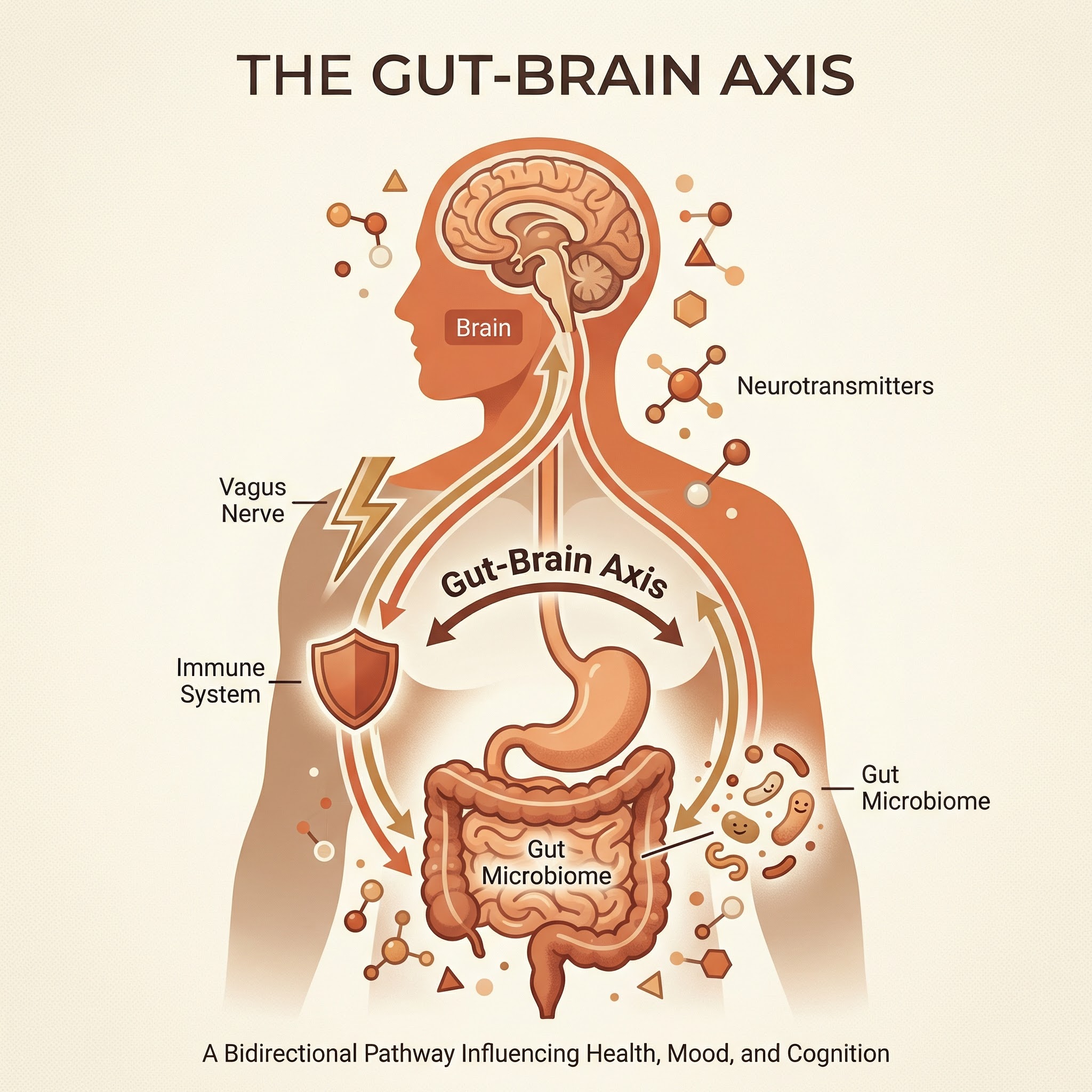
For a long time, we viewed the gut as a simple food-processing tube. We eat, it digests, we eliminate. But groundbreaking research has revealed a far more complex and powerful reality. Your gut is a dynamic, intelligent system—a bustling metropolis that acts as a second brain and the command center for your body's health.
Think of it as the central station of a sprawling subway system. It's not just a stop along the line; it's the hub where all the lines intersect, where information is exchanged, and where the entire system is managed. This is your gut-brain axis, a constant, two-way conversation between the 100 trillion microbes in your gut and the command center in your head.
Your Immune System
An astonishing 70-80% of your immune cells reside in your gut. Your gut microbiome acts as a trainer for your immune system, teaching it to distinguish between friend and foe.
Your Mood & Mental Health
Your gut microbes produce hundreds of neurochemicals, including up to 95% of your body's serotonin (the "happy chemical") and GABA (the "calming chemical").
Your Longevity
A diverse gut microbiome is directly linked to healthy aging. Individuals who maintain a rich gut ecosystem tend to live longer, healthier lives.
Analogy: The Rainforest Ecosystem
A healthy gut is like a thriving rainforest: a place of immense diversity. Thousands of different species (bacteria) coexist, each with a specific role. This diversity creates resilience. If one species struggles, others can step in. In contrast, a low-diversity gut is like a monoculture farm—vulnerable to disease, pests (harmful bacteria), and environmental stress.
The Power of Diversity
Why Diversity Matters: The Rainforest Principle
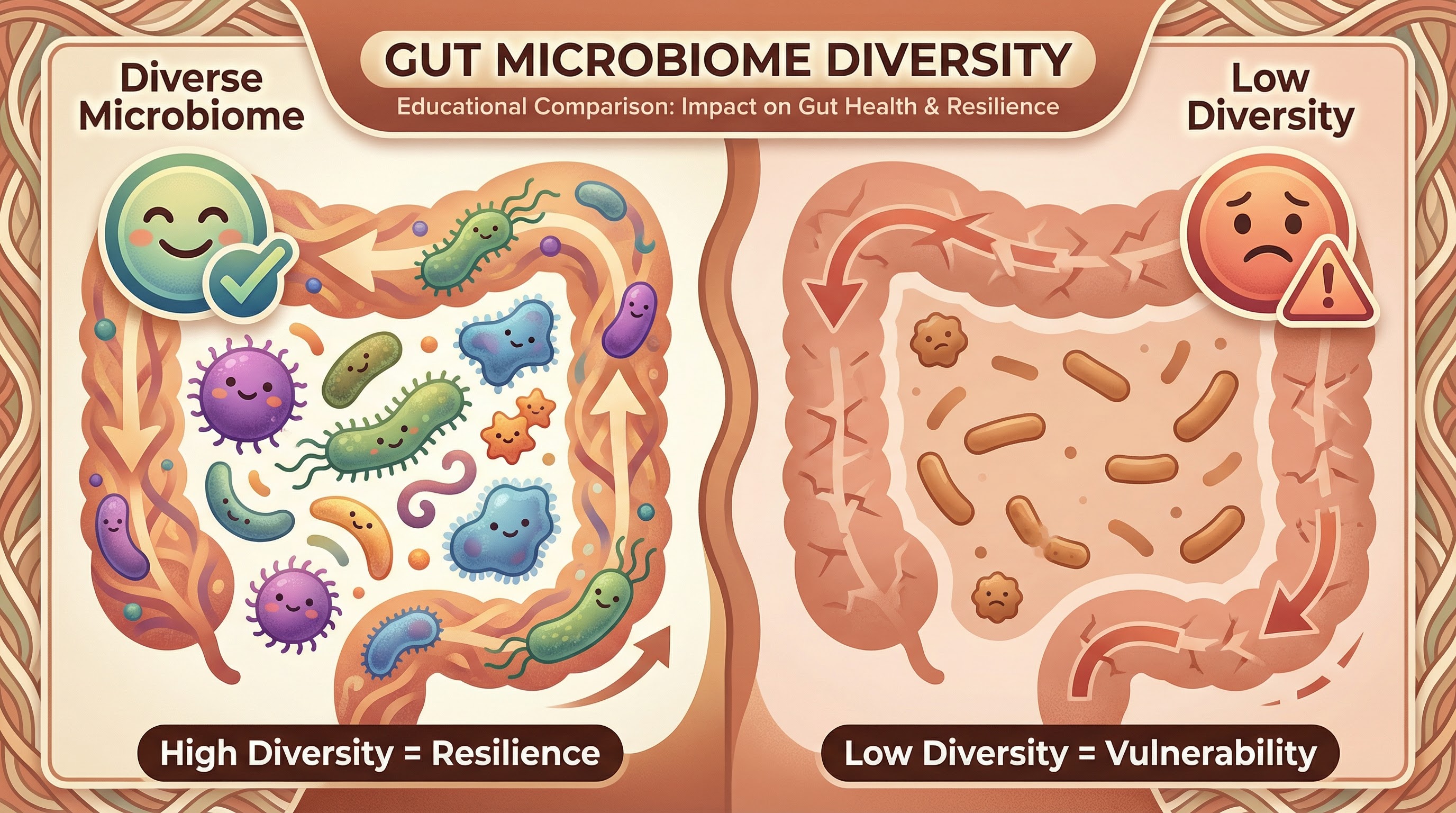
When scientists study the healthiest, longest-living populations on Earth, they find a common thread: a remarkably diverse gut microbiome. But what does "diversity" actually mean in this context, and why is it so crucial?
Diversity in your gut refers to the variety of different bacterial species living there. A healthy gut might house thousands of different species, each with unique roles—some break down fiber, others produce vitamins, and still others train your immune system. This is the Rainforest Principle: just as a biodiverse rainforest is more resilient to disease, drought, and pests, a diverse gut microbiome is more resilient to illness, inflammation, and disruption.
The Modern Diversity Crisis
Over the past century, our collective gut diversity has plummeted. Why? The answer lies in our dramatically altered diet. Our ancestors consumed upwards of 100-150 grams of fiber daily from wild plants, roots, and tubers. Today, the average American consumes a mere 10-15 grams. This fiber famine has starved out many beneficial bacterial species, leading to what scientists call "microbial extinction."
The good news? You can rebuild diversity. It starts with what you put on your plate.
Feeding Your Inner Garden
The Fiber Factor: Your Microbiome's Favorite Food
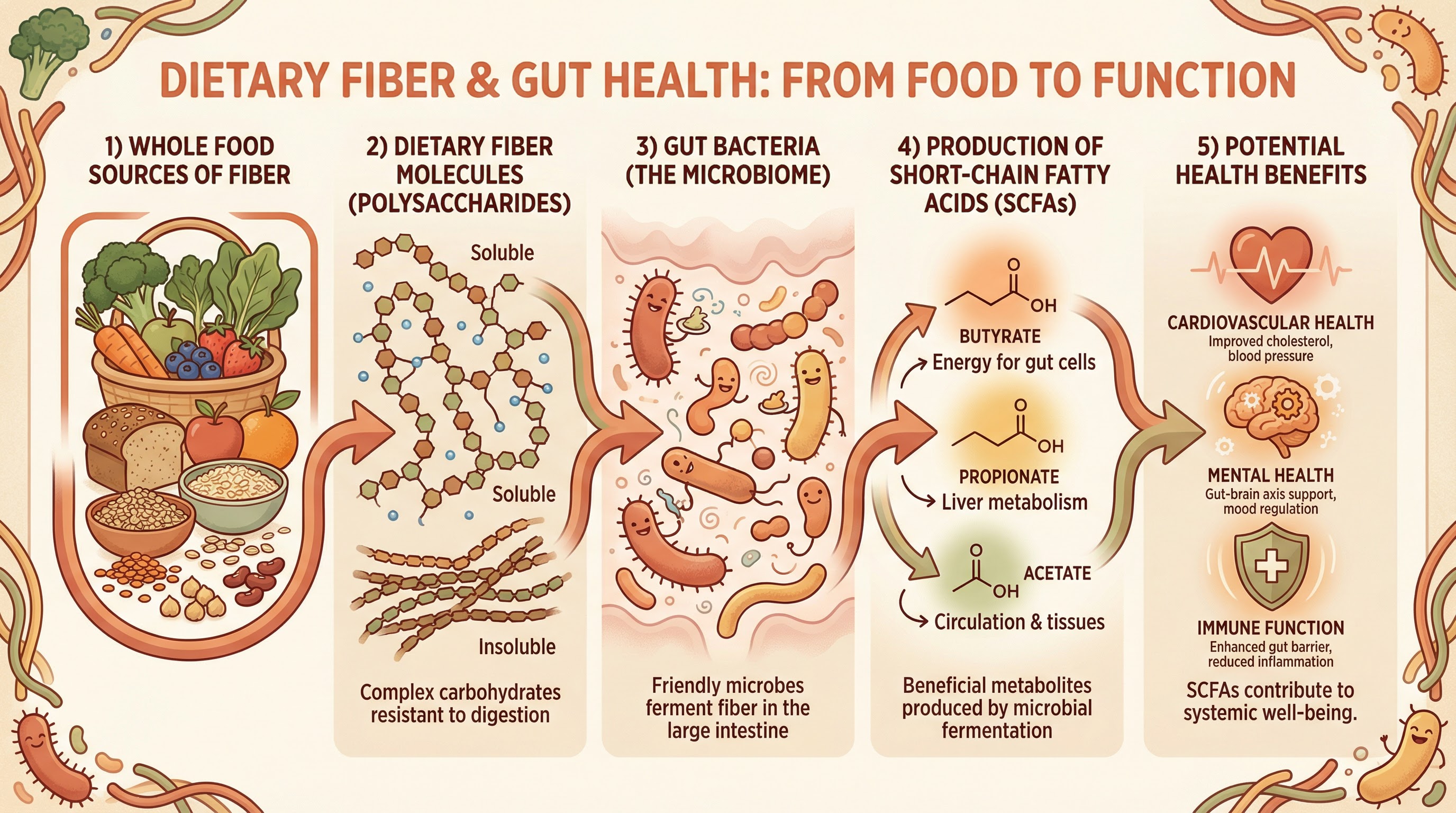
If your gut microbiome is a garden, then dietary fiber is the fertilizer. It's the single most important nutrient for cultivating a thriving inner ecosystem. But here's the catch: you can't digest fiber. That's precisely the point.
Dietary fiber is a type of carbohydrate that passes through your small intestine undigested and arrives in your colon, where trillions of hungry bacteria are waiting. These microbes ferment the fiber, breaking it down into powerful compounds called short-chain fatty acids (SCFAs)—primarily butyrate, propionate, and acetate.
The Fiber Hierarchy: Not All Fiber is Created Equal
| Fiber Type | Best Sources | Why It's Special |
|---|---|---|
| Resistant Starch | Cooked and cooled potatoes, rice, green bananas, oats | Highly fermentable; boosts butyrate production |
| Inulin & FOS | Onions, garlic, leeks, asparagus, Jerusalem artichokes | Prebiotic; selectively feeds beneficial Bifidobacteria |
| Beta-Glucan | Oats, barley, mushrooms | Supports immune function and lowers cholesterol |
| Pectin | Apples, citrus fruits, carrots | Feeds diverse bacteria; anti-inflammatory |
| Cellulose & Hemicellulose | Whole grains, nuts, seeds, vegetables | Adds bulk; supports regularity and overall diversity |
Practical Tip: The 30-Plant Rule
Research from the American Gut Project found that people who eat 30 or more different plant foods per week have the most diverse gut microbiomes. This doesn't mean 30 servings—it means 30 different types. Count them: spinach, blueberries, almonds, lentils, quinoa, and so on. Variety is the spice of life—and the secret to a thriving gut.
The Probiotic & Prebiotic Partnership
Probiotics: Planting New Seeds
While fiber feeds your existing gut bacteria, probiotics introduce new, beneficial strains. Think of them as "seeds" you're planting in your inner garden. Probiotics are live microorganisms that, when consumed in adequate amounts, confer health benefits.
Best Probiotic Food Sources:
A landmark Stanford study found that a diet rich in fermented foods increased gut microbiome diversity and reduced markers of inflammation in just 10 weeks.
Prebiotics: The Fertilizer
Prebiotics are specific types of fiber that selectively nourish beneficial bacteria, particularly Lactobacilli and Bifidobacteria. While all prebiotics are fiber, not all fiber is prebiotic. Prebiotics are like premium fertilizer, designed to help the "good guys" thrive.
Top Prebiotic Foods:
The Synbiotic Effect
When you combine probiotics and prebiotics in the same meal—say, yogurt with berries and flaxseeds—you create a "synbiotic" effect. The probiotics (live bacteria) are immediately nourished by the prebiotics (their food), giving them the best chance to colonize and thrive in your gut.
Building Your Gut-Healthy Plate
The Whole-Foods Foundation
The most powerful tool for gut health isn't a pill or a powder—it's your fork. A whole-foods, plant-based approach naturally provides the fiber, polyphenols, and nutrients your microbiome craves.
Vegetables & Fruits
Dark leafy greens, cruciferous vegetables, colorful produce, berries
Maximum fiber, polyphenols, and phytonutrients
Whole Grains & Starches
Quinoa, brown rice, oats, barley, sweet potatoes, squash
Complex carbs and resistant starches for SCFAs
Legumes, Nuts & Seeds
Lentils, chickpeas, black beans, almonds, walnuts, tempeh
Protein, fiber, and prebiotics in one package
✓ Add Daily:
- • Fermented foods (yogurt, kefir, sauerkraut, kimchi)
- • Healthy fats (olive oil, avocado)
- • Fresh herbs & spices (turmeric, ginger, cinnamon)
✗ Limit:
- • Highly processed foods
- • Added sugars
- • Artificial sweeteners
Aim for progress, not perfection
Beyond Diet: Lifestyle Factors
The Complete Picture
While nutrition is the cornerstone of gut health, other lifestyle factors play supporting roles:
Sleep
Your gut microbiome follows a circadian rhythm, just like you. Poor sleep disrupts this rhythm and reduces microbial diversity. Aim for 7-9 hours of quality sleep.
Exercise
Regular physical activity increases gut diversity and promotes the growth of butyrate-producing bacteria. Even moderate exercise—like a daily 30-minute walk—makes a difference.
Stress Management
Chronic stress alters gut bacteria composition and increases intestinal permeability. Practices like meditation, deep breathing, and yoga can help restore balance.
Hydration
Water is essential for fiber to do its job. Without adequate hydration, fiber can't move smoothly through your digestive tract. Aim for 8-10 glasses daily.
Limit Unnecessary Antibiotics
While sometimes medically necessary, antibiotics are like a forest fire in your gut—they wipe out both harmful and beneficial bacteria. Use them only when truly needed.
Measuring Your Progress
The Power of Personalization
Every gut microbiome is as unique as a fingerprint. What works for one person may not work for another, which is why personalized insights can be transformative.
How Do You Know If Your Gut is Healthy?
While symptoms like regular digestion, sustained energy, and stable mood are good indicators, they don't tell the whole story. Gut microbiome testing provides a detailed snapshot of your inner ecosystem, revealing:
Diversity Levels
Are you hosting a rainforest or a desert?
Beneficial Bacteria
Do you have enough of the "good guys"?
Potential Imbalances
Are harmful bacteria overgrown?
Functional Capacity
Can your microbiome produce SCFAs effectively?
Interested in learning more about your gut health?
I offer comprehensive gut microbiome testing and personalized 1:1 nutrition counseling to help you optimize your inner garden. Whether you're an athlete looking to enhance performance, or simply seeking to improve your energy and longevity, understanding your gut is the first step.
Cultivate Your Inner Garden
Your Journey Starts Today
Your gut microbiome is not static—it's a living, breathing ecosystem that responds to every choice you make. The foods you eat, the sleep you get, the stress you manage, and the movement you embrace all shape this inner garden.
The science is clear: a diverse, well-nourished microbiome is foundational to a long, vibrant, healthy life. But knowledge without action is just potential. The real transformation happens when you take what you've learned and apply it, one meal, one day, one choice at a time.
Your Action Plan
Eat 30+ different plant foods per week to maximize diversity
Prioritize fiber-rich whole foods at every meal
Include fermented foods daily for probiotic benefits
Stay hydrated, move your body, and manage stress
Consider personalized testing to understand your unique microbiome
Here's to your health, from the inside out.
Ready to Transform Your Gut Health?
I offer comprehensive gut microbiome testing and personalized 1:1 nutrition counseling to help you optimize your inner garden. Whether you're an athlete looking to enhance performance, or simply seeking to improve your energy and longevity, understanding your gut is the first step.